
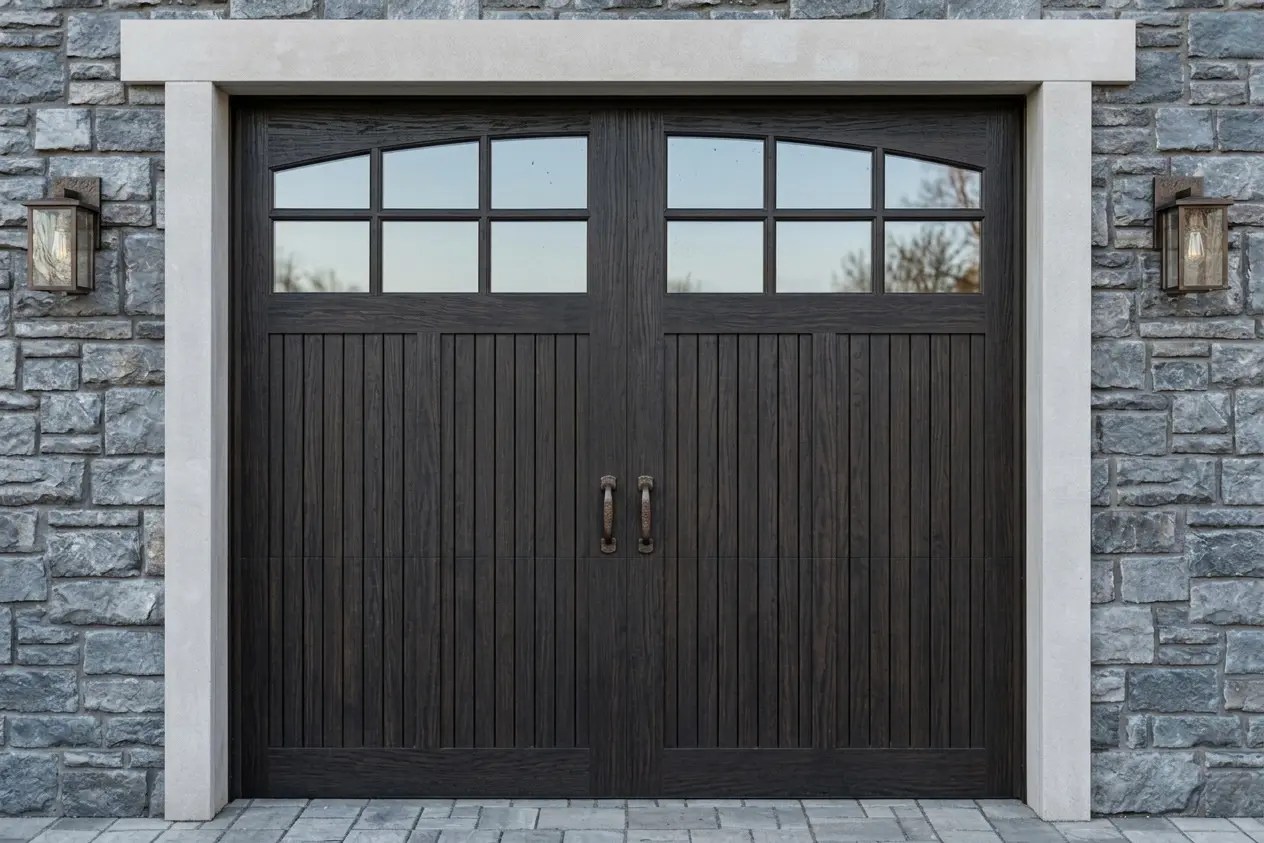
Your garage door spring snapped. The door won’t move. You go online, find a YouTube video, and think — how hard can it be?
The honest answer: garage door springs are one of the most dangerous components in your home. Every year, people are seriously injured — attempting DIY spring repairs. This isn’t a scare tactic. It’s physics.
Here’s what you need to know before you touch anything.
Why Garage Door Springs Are Dangerous
A standard torsion spring holds between 100 and 200 pounds of stored tension — even when the door is closed. When that tension releases suddenly, it doesn’t just break. It whips, snaps, and can strike with enough force to break bones, shatter glass, or cause fatal injuries.
The spring isn’t the only risk. Adjusting or replacing it requires winding bars, precise torque, and an understanding of how the entire system is balanced. One wrong move and the door — which can weigh 200+ pounds — comes down fast.
This is not a job for trial and error.
What Happens When a Spring Breaks
There are two types of springs — torsion springs (mounted above the door) and extension springs (mounted on the sides). Both can fail, and both are under serious tension.
Torsion Spring Failure
You’ll usually hear a loud bang — like a gunshot — from inside the garage. The door becomes extremely heavy and won’t open manually without serious effort.
Extension Spring Failure
The spring may snap and fly across the garage. Without a safety cable (which many older systems don’t have), this becomes a serious projectile hazard.
What To Do Right Now
Stop using the door completely. Don’t try to force it open. Don’t disconnect the opener and lift manually unless you absolutely have to — and if you do, use both hands and keep others away.
Can You DIY It? Technically Yes. Should You? No.
The parts are available online. The videos exist. And yes, some people do it themselves without getting hurt.
But here’s the reality: a professional handles this job in 45–60 minutes, with the right tools, proper safety equipment, and years of experience reading how a specific door is balanced. They also inspect the cables, drums, and bottom brackets while they’re there — because a spring failure often signals other parts are near the end of their life too.
The cost of a professional repair is a fraction of what an ER visit costs. And it’s nothing compared to what happens if the door comes down on someone.
How Long Do Garage Door Springs Last?
Standard springs are rated for about 10,000 cycles — one cycle being one open and one close. For a family that uses the garage twice a day, that’s roughly 7–10 years.
High-cycle springs (20,000–30,000 cycles) cost more upfront but last significantly longer. If your spring just broke and you’re replacing it, it’s worth asking your technician about upgrading — especially in South Carolina’s heat and humidity, which accelerates wear on standard springs.
Signs your spring is near the end of its life: the door feels heavier than usual, it moves unevenly, or you hear creaking and grinding during operation.
BROKEN SPRING IN SOUTH CAROLINA?
Don’t touch it.
Call us first.
We handle spring replacements across Upstate South Carolina — same day, done right, with a full system inspection included.
More posts
Lampirio Garage Doors · Serving Upstate South Carolina · (864) 784-1244
